Cowboy Adventure: The Bold Font That Brings Grit, Charm, and Playful Energy to Real Projects
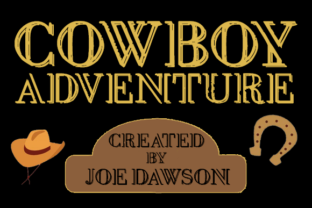
When you see Cowboy Adventure, you don’t just read it—you feel it. It’s a strong, decorative font with unmistakable Western spirit: bold letterforms, subtle serifs, rugged curves, and just enough flair to suggest campfire stories, dusty trails, and wide-open skies. But it’s not just for rodeo posters or vintage saloon signs. In the hands of designers, marketers, educators, small business owners, and even hobbyists, Cowboy Adventure works surprisingly well across real-world projects—when used with intention.
Where Cowboy Adventure Fits Naturally (and Where It Doesn’t)
This isn’t a utility font like Roboto or Open Sans. Cowboy Adventure thrives in moments that call for personality—not neutrality. Think of it as your go-to voice when you want to say, “This matters, and it’s also fun.”
It shines brightest in contexts where tone, mood, and brand character are as important as legibility:
- Small-batch food branding—think artisanal jerky labels, craft root beer cans, or farmers’ market honey jars. A label using Cowboy Adventure for the product name instantly signals authenticity, handcrafted care, and a touch of rustic storytelling.
- Event signage and invitations—a backyard BBQ, a local music festival with Americana roots, or a school’s “Western Heritage Day.” Its visual weight holds up well on banners, chalkboard menus, and digital invites—even at medium sizes.
- Book covers and chapter headers—especially for middle-grade fiction, cozy Western mysteries, or humorous memoirs about life on a ranch or in a small town. It adds warmth and narrative energy without feeling cartoonish.
- Classroom resources for history or literature units—teachers use Cowboy Adventure for title slides, vocabulary posters, or timeline headers to spark engagement without overwhelming students. One 4th-grade educator told us her students immediately associated it with “the adventurous part of the unit”—not because it’s flashy, but because it feels *alive*.
Who Benefits—and How They Use It Differently
A freelance designer in Austin might choose Cowboy Adventure for a client’s new line of leather goods—not because the brand is literally Western, but because the font conveys durability, craftsmanship, and quiet confidence. She pairs it with a clean sans-serif for body text, letting Cowboy Adventure anchor headlines and product tags.
A wedding planner in Colorado uses it sparingly but deliberately: only on the “Ranch Elopement Package” page header and the welcome sign at the ceremony site. Her clients love how it evokes the setting without leaning into cliché—no cacti or spur graphics needed.
Meanwhile, a graphic designer building assets for a podcast about American folklore uses Cowboy Adventure for episode title cards—just once per image, always in uppercase, always centered over a muted desert-toned background. It’s not the whole identity, but it’s the emotional punctuation mark.
Practical Considerations Before You Type “Howdy” in Cowboy Adventure
Like any expressive typeface, Cowboy Adventure rewards thoughtful application—and gives clear feedback when pushed too far. Here’s what users consistently notice after working with it:
- Size matters more than usual. At under 24px, details like the slight taper on the ‘A’ or the curved tail on the ‘Q’ start to soften. For web use, stick to 32px minimum for headings—and test on mobile. Print is more forgiving, but even there, avoid sub-16pt usage in body copy.
- Pairing is non-negotiable. This font doesn’t play well with other decorative fonts—or with overly ornate scripts. It sings alongside neutral, humanist sans-serifs (like Lato, Nunito, or Montserrat) or sturdy slab-serifs (like Rockwell or Courier Prime). Avoid pairing it with anything that competes for attention.
- Spacing needs gentle adjustment. Default tracking often feels too tight for display use. Most designers add 20–50 units of letter-spacing in design tools—especially for all-caps applications. Kerning pairs like “AV”, “WA”, and “To” benefit from manual tweaks if you’re preparing high-fidelity mockups.
- It’s not built for long-form reading. No surprises here—it’s decorative, not functional. Don’t use it for paragraphs, captions, or interface labels. Reserve it for moments where you want the viewer to pause, recognize tone, and lean in.
Strengths That Go Beyond Aesthetics
What makes Cowboy Adventure more than just another Western-style font? Three things stand out in everyday use:
- It bridges nostalgia and modernity. Unlike fonts that lean heavily into caricature (think exaggerated woodcut textures or cartoonish outlines), Cowboy Adventure has clean lines and balanced proportions. That lets it feel grounded—not gimmicky—whether you’re designing for Gen Z shoppers or baby boomers who remember drive-in theaters.
- It scales with surprising grace. From a 2-inch sticker on a mason jar to a 10-foot banner at a county fair, its structure holds up. The x-height is generous, the contrast between thick and thin strokes is moderate—not extreme—so it avoids pixelation or blurring at larger sizes.
- It invites collaboration. Because it’s so tonally specific, it helps teams align quickly. When a client says, “We want something warm but not twee, bold but not aggressive,” dropping in Cowboy Adventure as a headline option often sparks immediate consensus—saving rounds of revisions.
When to Pause and Consider Alternatives
Cowboy Adventure isn’t wrong—it’s just not universal. If your project calls for:
- High accessibility standards (e.g., government outreach materials or health education for older adults), its decorative nature may reduce scan speed and recognition for some readers. Opt for tested, WCAG-compliant fonts instead.
- Global or multilingual reach (especially with extended Latin, Cyrillic, or diacritical characters), check whether the version you’re licensing includes full language support. Some free versions stop at basic English glyphs.
- Strict corporate branding guidelines that forbid decorative fonts entirely—or require strict hierarchy enforcement—using Cowboy Adventure even once may need formal approval. When in doubt, treat it as an accent, not an anchor.
A Final Thought for Real Users
You don’t need a lasso or a ten-gallon hat to use Cowboy Adventure. You just need a moment where tone carries as much weight as content—where “fun” and “strong” aren’t opposites, but companions. Whether you’re naming a sourdough starter, designing a trail map for a state park, or launching a podcast about forgotten American innovators, this font offers something rare: presence without pretense. It doesn’t shout. It stands tall, tips its hat, and waits for the right moment to speak.