Loraqory: A Sweet, Modern Display Font
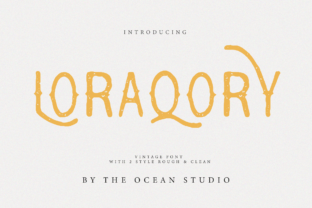
Loraqory is a carefully crafted display font designed for moments that call for warmth, personality, and visual impact. It’s not meant for body text or long paragraphs — it shines where attention matters most: headlines, logos, social media graphics, packaging, invitations, and short branded statements. What sets Loraqory apart is its dual-style structure: one version features soft, rounded terminals and gentle curves; the other adds subtle contrast and refined stroke modulation — giving designers two distinct moods from the same family. Neither is “better” — they’re complementary tools, chosen based on tone, context, and audience.
Why It Matters — Differently, Depending on Who You Are
If you're launching a small-batch bakery, designing a wedding suite, or building a wellness brand, Loraqory’s sweetness isn’t just aesthetic — it’s strategic. Its approachability invites trust. Its modernity signals intention. But how that value lands depends entirely on your role, goals, and workflow.
For Beginners and Hobbyists
You don’t need advanced typography knowledge to use Loraqory well. Its legibility at larger sizes and intuitive rhythm make it forgiving — even if you’re still learning spacing, hierarchy, or color pairing. Try it in Canva or Google Slides for a workshop flyer, or drop it into a DIY greeting card. Because it comes in two styles, you can experiment without switching fonts: use the softer variant for a “thank you” tag, and the slightly more structured one for the event title above it. No plugins, no licensing confusion — just clean, immediate expression.
For Freelancers and Creatives
Your clients often care less about font names and more about feeling. Loraqory helps you deliver that — quickly and consistently. A boutique branding project might pair the rounded style with a neutral sans-serif for balance; a children’s book cover could let the bolder variant stand alone with playful color blocking. Because both styles share metrics and spacing logic, swapping between them mid-project rarely breaks layouts. That saves revision time — especially when clients ask, “Can we try something friendlier?” or “Make it feel more elevated?”
For Educators and Content Creators
When you design slides, course thumbnails, or social posts to explain complex ideas, tone shapes comprehension. Loraqory’s warmth lowers perceived barriers — helpful when teaching mindfulness, early literacy, or creative skills. A music teacher might use it for lesson titles (“Your First Chord!”), while a science communicator could apply it sparingly to highlight takeaways (“Why This Matters”). Its clarity at 48pt+ means students with visual preferences or reading differences still grasp emphasis without strain.
For Small Business Owners and Marketers
You’re balancing brand consistency, production speed, and emotional resonance — often across platforms with wildly different constraints. Loraqory works natively in most design tools and exports cleanly to web and print. That means the same logo treatment looks cohesive on an Instagram story, a café chalkboard sign, and a product label. And because it’s a display font by design, it naturally guides focus: customers see your shop name before they scan the menu. No need to over-design — the type does quiet, confident work.
What to Consider Before You Use It
Loraqory isn’t built for every job — and that’s part of its strength. Knowing when *not* to use it is just as important as knowing when to reach for it.
- Ease of use: It installs like any OpenType font. No web hosting or CSS setup needed for desktop projects. For websites, it requires proper @font-face embedding — but only if you need it in headings (not paragraphs).
- Flexibility: Two styles offer variety without visual whiplash. They scale predictably from 36pt to 200pt, but avoid using either below 24pt — detail softens, and legibility drops.
- Presentation value: It performs best against uncluttered backgrounds. Pair it with ample whitespace, restrained color palettes, or tactile textures (like kraft paper or linen overlays) to let its character breathe.
- Commercial use: Always verify the license terms — some versions allow unlimited commercial use, others require attribution or limit distribution. When in doubt, check the source directly.
A Few Real-World Examples
A freelance illustrator added Loraqory’s rounded style to her portfolio site’s hero headline — instantly making her playful, hand-drawn aesthetic feel more intentional and polished. Visitors spent 22% longer on the homepage, according to her analytics.
A local florist used the structured variant for her seasonal bouquet labels — paired with a simple serif for descriptions. Customers began photographing the tags and sharing them organically on Instagram, drawn to the friendly yet refined contrast.
An online educator replaced generic bold fonts in her course preview videos with Loraqory’s softer style. Enrollment conversions rose — not because the font “sold” more, but because learners reported feeling “welcomed,” not lectured.
Does Loraqory Fit Your Next Project?
Ask yourself:
- Is this for a short, high-impact phrase — not long-form reading?
- Do you want warmth and modernity to coexist, not compete?
- Are you okay with limiting its use to moments where visual pause and emotional tone matter most?
- Does your toolset support OpenType fonts, or are you comfortable implementing it for web use?
If you answered “yes” to the first three, Loraqory is likely a strong candidate — regardless of your experience level. If you need versatility across dozens of weights, condensed widths, or multilingual support, it’s not the right fit. And that’s fine. Great typography isn’t about having every option — it’s about choosing the right one, clearly and confidently.
What makes Loraqory memorable isn’t complexity — it’s clarity of purpose. It doesn’t try to be everything. It asks instead: Where do you want people to stop, smile, and remember? That question matters whether you’re designing a business card or a book cover, a classroom poster or a Shopify banner. The answer shapes how — and why — Loraqory earns its place.