Southsider: A Strategic Choice for Bold Visual Positioning
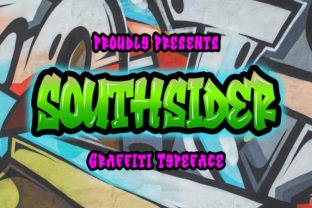
Southsider isn’t just another display font—it’s a deliberate visual signal. Designed with the raw energy and spatial awareness of urban graffiti, it carries intentionality in every glyph. Its thick strokes, uneven baselines, and confident asymmetry aren’t accidents; they’re calibrated tools for standing out in saturated digital and physical environments. For professionals who understand that typography is never neutral—especially in branding, marketing, and creative execution—Southsider offers a rare combination: high recognizability, strong personality, and built-in contextual resonance.
Why Southsider Fits Real-World Strategy (Not Just Aesthetic Preference)
Choosing a typeface is a strategic decision—not a decorative afterthought. When you select Southsider, you’re aligning your visual language with specific audience expectations and communication goals. It works best where authenticity, local identity, or cultural fluency matters: neighborhood businesses launching a rebrand, indie publishers designing limited-edition covers, event organizers promoting street art festivals, or educators building youth engagement materials around urban design or social history.
Its graffiti-inspired DNA signals immediacy, human craft, and grounded creativity. That makes it especially effective when competing against polished-but-generic corporate fonts. In markets where trust is earned through perceived sincerity—not perfection—Southsider can serve as a quiet differentiator. It doesn’t shout “look at me”; it says “this belongs here.”
Where Southsider Delivers Measurable Value
Use cases matter more than features. Southsider earns its place when applied with precision—not ubiquity. Consider these high-leverage applications:
- Event branding for community-driven initiatives: A mural workshop series, pop-up gallery night, or neighborhood clean-up campaign gains cohesion and local credibility when Southsider anchors posters, social banners, and signage.
- Cover typography for independent publishing: Zines, poetry chapbooks, or urban studies anthologies benefit from Southsider’s tactile presence on covers—communicating voice before a single page is turned.
- Product packaging for artisanal or hyperlocal goods: Craft breweries, small-batch roasters, or handmade apparel labels use Southsider to reinforce origin stories without relying on clichéd “hand-drawn” tropes.
- Digital landing pages for experiential offerings: A weekend graffiti tour, a youth-led design bootcamp, or a city walking history app gains visual consistency and emotional alignment when Southsider appears in hero headers—paired with clean, highly legible body text.
Notice what’s missing from this list: email newsletters, legal disclaimers, multi-step forms, or data dashboards. Southsider isn’t designed for sustained reading or functional clarity. Its strength lies in momentary impact—not endurance.
How to Use Southsider Without Undermining Your Goals
Intentional use starts with constraints. Before applying Southsider, ask three questions:
- What action do I want the viewer to take? If the goal is scanning, comparing, or acting quickly (e.g., “Book Now,” “Download Guide”), Southsider should appear only in the most prominent, scannable element—not across multiple interface layers.
- What does this say about my brand’s relationship to its audience? Southsider implies familiarity with urban culture—not appropriation of it. If your team lacks lived experience or meaningful ties to the communities that shaped graffiti aesthetics, consider whether this font supports or undermines credibility.
- Is there enough contrast between expression and function? Pair Southsider exclusively with highly legible, neutral sans-serifs (e.g., Inter, Open Sans, or even system fonts like -apple-system) for body copy, captions, and navigation. Never set full paragraphs—or worse, critical instructions—in Southsider.
A practical rule of thumb: limit Southsider to one primary typographic role per project. That might be logo lockups, section headers, or call-to-action buttons—but not all three simultaneously. Consistency builds recognition; overuse dilutes meaning.
Risks of Misaligned Application
Using Southsider without clear purpose introduces tangible risks. First, accessibility: its irregular spacing and tight letterfit reduce readability for users with dyslexia or low vision—and may fail WCAG contrast guidelines if used over busy backgrounds. Second, perception: applied without cultural context, it can unintentionally evoke rebellion without substance, or suggest informality where authority is expected (e.g., financial services, healthcare communications, or academic institutions). Third, scalability: Southsider’s expressive details often collapse at small sizes, making it ineffective for mobile interfaces or printed collateral under 24pt.
These aren’t flaws in the font—they’re natural boundaries. Recognizing them allows smarter decisions. A restaurant menu using Southsider for dish names but pairing it with a crisp, open sans-serif for descriptions respects both atmosphere and utility. A nonprofit using Southsider only in their annual report’s opening spread—then switching to a highly legible serif for narratives—honors tone without sacrificing comprehension.
Planning for Long-Term Typography Health
Think beyond the next campaign. Fonts shape how audiences remember your work over time. Southsider has strong recall value—but only when used consistently and sparingly. Document usage rules early: specify exact weights (it includes Bold and Black variants), define minimum sizes, outline acceptable color pairings (deep navy or charcoal on cream works better than neon-on-black for longevity), and note prohibited contexts (e.g., “never in email subject lines” or “not for regulatory disclosures”).
Also consider licensing. Southsider is available under commercial licenses that cover web, desktop, and app use—but verify permissions for your specific deployment (e.g., embedded PDFs, SaaS platforms, or merchandise). An oversight here creates operational friction down the line, not just legal risk.
When to Choose Something Else
Southsider isn’t universally appropriate—and that’s a strength, not a limitation. Choose alternatives when:
- Your audience prioritizes speed and certainty over stylistic distinction (e.g., B2B software onboarding flows).
- You’re communicating complex information requiring hierarchical clarity (e.g., policy documents, technical documentation, or multilingual interfaces).
- Your brand voice centers on refinement, tradition, or precision (e.g., heritage watchmakers, classical music ensembles, or architectural firms specializing in historic preservation).
- You lack internal capacity to maintain consistent typographic discipline—because inconsistent application erodes trust faster than no stylization at all.
In those cases, a well-chosen geometric sans-serif or a sturdy transitional serif will serve your goals more reliably. The mark of strategic typography isn’t always choosing the boldest option—it’s choosing the one that moves the needle on outcomes.
Final Thought: Typography as a Decision Framework
Southsider invites confidence—but rewards restraint. It works because it’s distinctive, not because it’s decorative. Every time you reach for it, treat it as a decision point: Does this choice clarify my intent? Does it reflect who I serve—and how I wish to be understood? Does it support the next step I want someone to take?
That kind of thinking separates memorable visual identity from fleeting trend adoption. Southsider gives you permission to be bold—but insists you define *why*. Used with that level of intention, it becomes more than a font. It becomes part of your operational clarity.